


SKU:68001-16-S
Spark Zip Up Air Vest
Spark Zip Up Air Vest
Couldn't load pickup availability
The Spark Air Vest is an advanced safety vest designed for equestrians seeking optimal protection without compromising comfort. Engineered to conform closely to the rider's body, this lightweight vest features an adjustable belt for a secure fit, ensuring freedom of movement during rides. Utilizing cutting-edge safety technology, the Spark Air Vest rapidly inflates upon detecting a fall, providing immediate cushioning to reduce impact injuries.
In case of a fall, the vest is inflated by a CO₂ cartridge in less than 0.2 seconds delivering fast, effective protection right when you need it most. Its low-profile design allows for seamless integration over or under riding attire, making it suitable for various equestrian disciplines. The safety standard passed for Spark vests is NF S72-800:2022.
Features:
- Rapid Inflation: Activates instantly in the event of a fall, offering swift protection.
- Lightweight & Ergonomic: Designed to minimize bulk while maximizing safety.
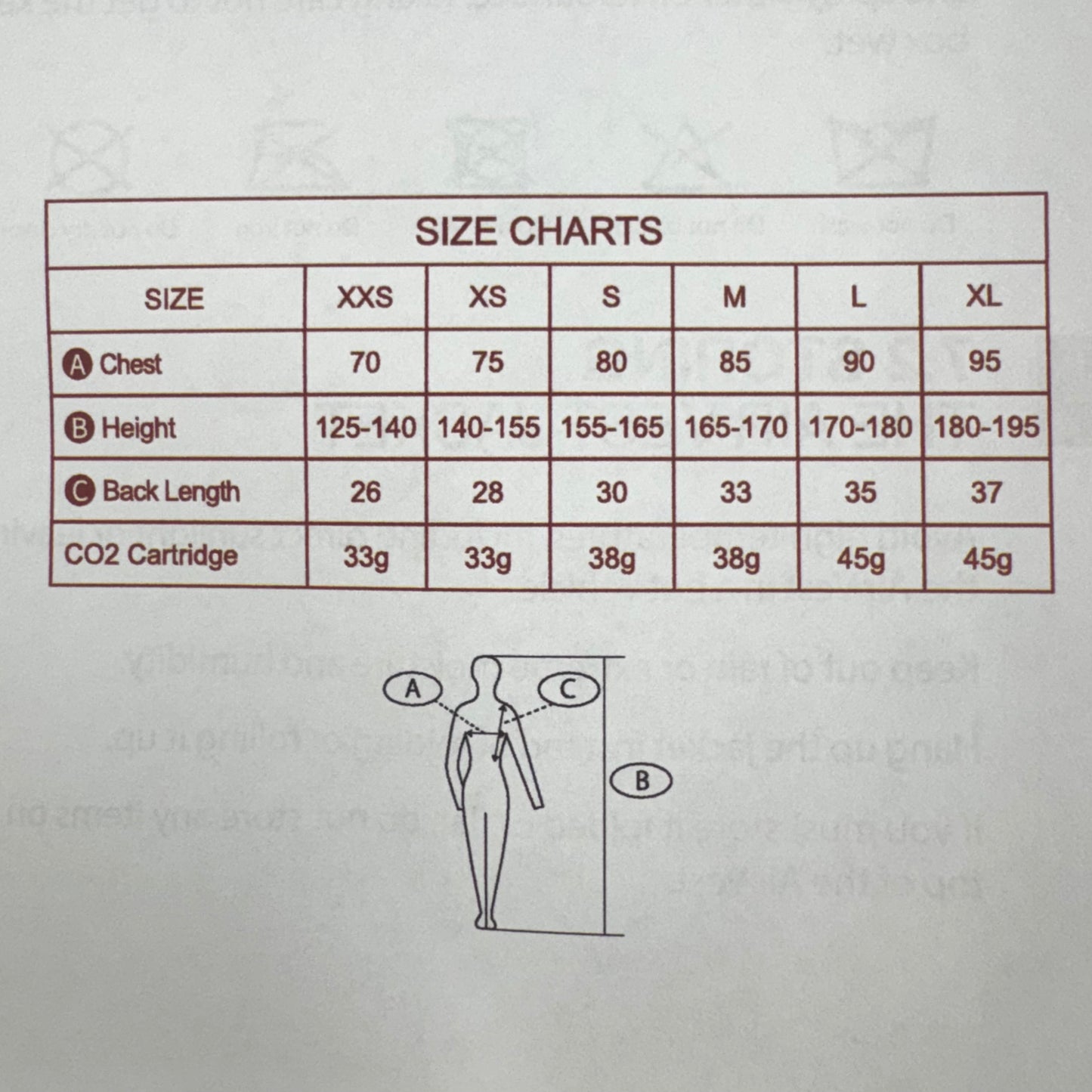
- Adjustable Fit: Customizable belt ensures a snug and comfortable fit for all riders.
- Versatile Design: Suitable for both training sessions and competitive events.
- The safety standard passed for Spark vests is NF S72-800:2022
NF S72-800:2022 Safety Standard
The Spark Zip Up Air Vest is certified to NF S72-800:2022, the first safety standard developed specifically for equestrian air vests.
This standard was created in France to address the real mechanics of riding falls — including how riders land, how the body moves during a fall, and which areas need protection most. It is not adapted from motorcycle or other sports standards.
What This Standard Evaluates
NF S72-800:2022 establishes clear performance requirements for equestrian air vests, including:
- Rapid inflation timing to provide protection before impact
- Coverage of critical areas, including the torso, spine, and neck
- Impact absorption, helping reduce the force transferred to the rider
- Control of excessive body movement, particularly through the spine
- Reliable activation of the airbag system during a fall
- These requirements are based on equestrian-specific injury data and riding conditions.
- Independently Tested and Verified
Compliance with NF S72-800:2022 is confirmed through independent laboratory testing by accredited certification bodies. This ensures the vest’s performance is verified by a third party, rather than relying on manufacturer claims alone.
Many products meeting this standard also qualify for CE certification, which is required for protective equipment sold in Europe.
Why This Matters for Riders
NF S72-800:2022 is the reference standard for equestrian air vests because it reflects how riders actually fall and what protection is most meaningful in those moments.
Choosing an air vest tested to this standard provides confidence that the product meets defined safety benchmarks developed specifically for horseback riding.
Frequently Asked Air Vest Questions:
1. What does an air vest actually protect?
An equestrian air vest is designed to protect the upper body during a fall, specifically the chest and ribs, back and spine, neck and cervical area, and abdomen and core. When activated, the airbag inflates to absorb impact energy and stabilize the body, helping reduce the severity of certain injuries associated with falls from a horse. Staff framing: Air vests are impact-mitigation tools, not guarantees against injury.
2. How does an air vest know when to inflate?
Most air vests use either mechanical tether systems connected to the saddle or electronic sensors using accelerometers and motion algorithms. In a mechanical system, the vest inflates when the rider is separated from the saddle with sufficient force. In electronic systems, inflation is triggered by detecting a fall pattern. Both systems are tested under equestrian-specific conditions when certified to NF S72-800:2022.
3. Will it go off if I just dismount or lean too far?
Under normal riding and mounting or dismounting, no. Air vests are designed to activate only when specific force or motion thresholds are met. Normal movements, posting, jumping, or controlled dismounts should not trigger deployment. Proper adjustment and correct tether length for mechanical systems are critical to avoid accidental deployment.
4. How fast does an air vest inflate?
Certified equestrian air vests are tested to inflate extremely quickly, typically within fractions of a second after activation. NF S72-800:2022 specifically evaluates inflation speed because protection must be in place before impact, not after.
5. Is an air vest better than a traditional body protector?
They serve different purposes. Traditional body protectors provide constant, passive protection against crushing and blunt force. Air vests provide dynamic protection that activates during a fall and offers greater coverage of the spine, neck, and upper body. Many riders choose to wear an air vest over a body protector depending on discipline and personal risk tolerance. Avoid “better vs worse” language and focus on use case and rider preference.
6. Do air vests replace helmets?
No. Air vests do not protect the head and are not a substitute for a properly fitted, certified helmet. Helmets and air vests are complementary forms of protection.
7. Are air vests allowed in competition?
In most disciplines, yes, but rules vary by organization and class. Many federations allow air vests, especially when worn over traditional body protectors, while some disciplines or levels have specific requirements. Riders should always check their governing body’s rules, particularly for rated competition.
8. What happens after the vest deploys?
After deployment, the airbag deflates gradually, the CO₂ cartridge must be replaced, and the vest should be inspected before reuse. Most deployments do not require replacing the entire vest unless there is visible damage.
9. How many times can an air vest be used?
An air vest can typically be used many times as long as the vest fabric and airbag are undamaged, the triggering system is functioning properly, and a new cartridge is installed after each deployment. Periodic inspection is important, especially after a fall.
10. Do air vests need maintenance?
Yes, but maintenance is minimal. This includes regular visual checks for wear or damage, proper storage in a dry environment without long-term compression, cartridge replacement after deployment, and for electronic systems, charging and firmware updates as required. Air vests are protective equipment, not “set it and forget it” apparel.
11. What does NF S72-800:2022 actually mean for the rider?
NF S72-800:2022 means the vest has been designed specifically for horseback riding falls, tested for inflation speed, coverage, and impact absorption, evaluated for spine and upper-body stabilization, and independently tested rather than self-certified by the brand. This gives riders confidence that the vest meets defined safety benchmarks, not just marketing claims.
12. Are all air vests the same?
No. Air vests vary in coverage area, fit and cut, inflation volume and pressure, triggering systems, and certification status. Certification to an equestrian-specific standard like NF S72-800:2022 is one of the clearest ways to compare safety performance.
13. Who should consider riding in an air vest?
Common users include eventers and jumpers, trail riders, young or developing riders, riders returning after injury, and professionals riding multiple horses. Air vests are appropriate for any rider who wants additional upper-body protection, regardless of discipline.
14. Is an air vest right for every rider?
Not necessarily. Fit, comfort, discipline, and personal risk tolerance all matter. The goal is informed choice, not pressure. A useful framing is: “An air vest is one more tool riders can choose to support their safety, based on how and where they ride.”
15. How should staff position air vests overall?
Education first. Air vests should be presented as a safety option grounded in testing and standards, a complement to good riding practices, helmets, and training, and a personal decision informed by discipline, experience, and comfort.


Why Buy from Golden Horseshoe Equestrian?
Golden Horseshoe Equestrian isn’t just another tack store — we’re your partners in the saddle, on the trail, and in the barn. Here’s why riders trust us:
- Local family owned, veteran owned and proudly serving the Midwest
- Real support from real horse people — in-store or online
- Fast, reliable shipping from our Eureka, Missouri headquarters.
- Saddle Trial Program available on all saddles.
- Easy returns and knowledgeable, personalized service
- Community-focused.
Join thousands of riders who choose Golden Horseshoe for quality gear, expert guidance, and small-town service with big-time expertise.

Subscribe to our emails
Be the first to know about new collections and exclusive offers.